
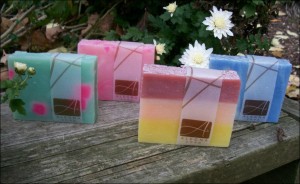
One of the questions I’ve been asked many times is “Is there lye in my soap?” I answer honestly that there is no lye in my soap but I did use lye to make the soap. This is pretty confusing to most people. If I used lye to make the soap, how can there be no lye in the soap?
The soap making process (saponification) is a chemical reaction. Chemical bonds are broken and new ones are made to make a new molecule, or a new substance. One way to think about this is to think about rust. When iron combines with oxygen in the presence of water, it turns into rust. This is a chemical change. The rust is a new substance.
Another way to think about it is to think about burning paper. If you mix paper and a lit match, you will have made ash. You used a lit match to make the ash, but there is no flame in the final product.
My final way to explain saponification is reserved for people I feel comfortable with. Suppose 10 couples go to a swingers pool party. They all jump in the pool and change partners. You no longer have the same 10 couples you started with. They have all changed. And so it is with the lye.
What do you think of my explanations? Which one is your favorite?
Yours in Gratitude,
Angela
Since coming down South the question I had been asked is do you have lye soap and at first I said all soap has lye in it. I finally figured out they were looking for lye heavy soap that they used to get out stains and such. BUT like your explanations above. I have used the making a cake analogy with eggs -flour-sugar making a cake 🙂
That’s a great answer Marilyn. I may borrow it. 🙂
I like the pool one! Such a fun way to explain the process 🙂
That’s my favorite too!