
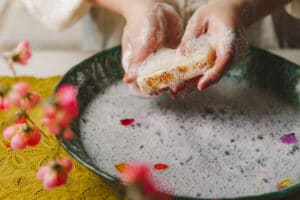
Have you ever wondered why I use the base soap oils I do for my soap recipe? Each oil contributes a certain quality to the soap bar. When I formulate, I’m looking for oils that will make a hard bar that has a luxurious and creamy lather, and is conditioning for my skin.
Coconut Oil
You don’t need bubbles to get clean, but we’ve been conditioned to believe we need them. Coconut oil is the go-to oil for bubbles.
According to Soap Making Resource, The lather produced by coconut oil is absolutely incredible. In fact, this oil produces such a great lather that 100% coconut oil soap will actually suds in salt water. Coconut oil is a wonderful ingredient to use in soap making to add hardness to your bar. This aspect of coconut oil is extremely valuable especially when you are creating soap with other oils that alone would produce a softer product. Too much coconut oil will produce an overly drying bar of soap, while smaller amounts will actually add moisturizing properties to the soap.
I have found that using too much coconut oil feels drying on my skin, which is why I use other oils to balance the bar.
Palm Oil
Palm oil makes a bar of soap hard. If people are paying $9 for one of my bars, they want it to last in their shower. There are other oils and bitters that help make a bar of soap hard, but palm oil is less expensive. That’s important when trying to keep the cost of the soap down.
From Nature with Love talks about the use of palm oil. “When used in cold process soap, Palm Oil makes a nice hard bar when used in combination with other oils such as coconut and olive oils. In cold process soap, it produces soaps that resist melting. It saponifies easily and pulls other oils into saponification more quickly.”
I know there’s a controversy regarding the use of palm oil. My colleague Marla Bosworth writes about why she went palm free. I use sustainable palm oil and I cut back the amount I use in my bars. But I do still like it in soap.
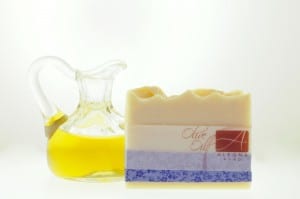
Olive Oil
An 100% olive oil soap doesn’t lather. I know, because I make one and it has a cult following. You either love it or you hate it. It feels slick and is so conditioning for your skin.
My friend Amanda says “Olive oil has been used as a cosmetic and soap ingredient for thousands of years. In today’s soap making, olive oil helps to produce a moisturizing creamy rich lather. The more olive oil you use, the more mild, gentle and low-cleansing your soap will be. However, your soap’s lather will also be reduced.”
Remember, I said you don’t need bubbles to get clean.
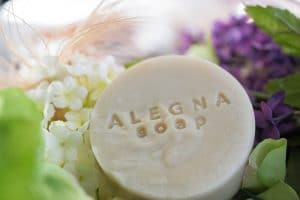
Shea Butter
To me, any butter adds a creaminess to a bar of soap that you can’t get with any other ingredient. And shea butter to me is the creamiest of them all. According to the Brambleberry website, “It contains 4 – 9% unsaponifiables (additional components in the fats and oils that can’t be fully converted into soap), which means it’s an excellent skin-loving ingredient in cold process soap.”
Maybe that’s why it’s my favorite butter.
Yours in Gratitude,
Angela